1. Write down what you eat for one week and you will lose weight. Studies found that people who keep food diaries wind up eating about 15 percent less food than those who don’t. Watch out for weekends: A University of North Carolina study found people tend to consume an extra 115 calories per weekend day,
, primarily from alcohol and fat.
Then cut out or down calories from spreads, dressings, sauces, condiments,
drinks, and snacks; they could make the difference between weight gain and
loss.
2.
Add 10 percent to the amount of daily calories you think you’re eating. If you think you’re consuming 1,700 calories a
day and don’t understand why you’re not losing weight, add another 170 calories
to your guesstimate. Chances are, the new number is more accurate. Adjust your
eating habits accordingly.
3.
Get an online weight loss buddy to lose more weight. A University of Vermont study found that
online weight-loss buddies help you keep the weight off. The researchers
followed volunteers for 18 months. Those assigned to an Internet-based weight
maintenance program sustained their weight loss better than those who met
face-to-face in a support group.
4.
Get a mantra. You’ve heard of a
self-fulfilling prophecy? If you keep focusing on things you can’t do, like
resisting junk food or getting out the door for a daily walk, chances are you
won’t do them. Instead (whether you believe it or not) repeat positive thoughts
to yourself. “I can lose weight.” “I will get out for my walk today.” “I know I
can resist the pastry cart after dinner.” Repeat these phrases and before too
long, they will become true for you.
 5. After breakfast,
stick to water. At breakfast, go ahead
and drink orange juice. But throughout the rest of the day, focus on water
instead of juice or soda. The average American consumes an extra 245 calories a
day from soft drinks. That’s nearly 90,000 calories a year—or 25 pounds! And
research shows that despite the calories, sugary drinks don’t trigger a sense
of fullness the way that food does.
5. After breakfast,
stick to water. At breakfast, go ahead
and drink orange juice. But throughout the rest of the day, focus on water
instead of juice or soda. The average American consumes an extra 245 calories a
day from soft drinks. That’s nearly 90,000 calories a year—or 25 pounds! And
research shows that despite the calories, sugary drinks don’t trigger a sense
of fullness the way that food does.
6.
Eat three fewer bites of your meal,one less treat a day, or one less glass of orange juice. Doing
any of these can save you about 100 calories a day, and that alone is enough to
prevent you from gaining the two pounds most people mindlessly pack on each
year.
7.
Watch one less hour of TV. A study of 76
undergraduate students found the more they watched television, the more often
they ate and the more they ate overall. Sacrifice one program (there’s probably
one you don’t really want to watch anyway) and go for a walk instead.
8.
Wash something thoroughly once a week. Whether that’s a floor, a couple of windows, the shower stall,
bathroom tile, or your car, a 150-pound person will burn about four calories
for every minute spent cleaning. Scrub for 30 minutes and you could work off
approximately 120 calories, the same number in a half-cup of vanilla frozen
yogurt.
9.
Wait until your stomach rumbles before you reach for food. It’s stunning how often we eat out of boredom,
nervousness, habit, or frustration—so often, in fact, that many of us have
actually forgotten what physical hunger feels like. If you’re hankering for a
specific food, it’s probably a craving, not hunger. If you’d eat anything you
could get your hands on, chances are you’re truly hungry. Find ways other than
eating to express love, tame stress, and relieve boredom.
 10. Sniff a banana, an
apple, or a peppermint when you feel hungry. You might feel silly, but it works. When Alan R. Hirsch, M.D.,
neurological director of the Smell & Taste Treatment and Research
Foundation in Chicago, tried this with 3,000 volunteers, he found that the more
frequently people sniffed, the less hungry they were and the more weight they
lost—an average of 30 pounds each. One theory is that sniffing the food tricks
the brain into thinking you’re actually eating it.
10. Sniff a banana, an
apple, or a peppermint when you feel hungry. You might feel silly, but it works. When Alan R. Hirsch, M.D.,
neurological director of the Smell & Taste Treatment and Research
Foundation in Chicago, tried this with 3,000 volunteers, he found that the more
frequently people sniffed, the less hungry they were and the more weight they
lost—an average of 30 pounds each. One theory is that sniffing the food tricks
the brain into thinking you’re actually eating it.
11.
Stare at the color blue. There’s a good reason
you won’t see many fast-food restaurants decorated in blue: it functions as an
appetite suppressant. So serve up dinner on blue plates, dress in blue while
you eat, and cover your table with a blue tablecloth. Conversely, avoid red,
yellow, and orange in your dining areas. Studies find they encourage eating.
12.
Eat in front of mirrors and you’ll lose weight. One study found that eating in front of
mirrors slashed the amount people ate by nearly one-third. Having to look
yourself in the eye reflects back some of your own inner standards and goals,
and reminds you of why you’re trying to lose weight in the first place.
13.
Spend 10 minutes a day walking up and down stairs. The Centers for Disease Control says that’s
all it takes to help you shed as much as 10 pounds a year (assuming you don’t
start eating more).
14.
Walk five minutes for at least every two hours. Stuck at a desk all day? A brisk five-minute
walk every two hours will parlay into an extra 20-minute walk by the end of the
day. And getting a break will make you less likely to reach for snacks out of
antsiness.
15.
You’ll lose weight and fat if you walk 45 minutes a day, not 30. The reason we’re suggesting 45 minutes instead
of the typical 30 is that a Duke University study found that while 30 minutes
of daily walking is enough to prevent weight gain in most relatively sedentary
people, exercise beyond 30 minutes results in weight and fat loss. Burning an
additional 300 calories a day with three miles of brisk walking (45 minutes
should do it) could help you lose 30 pounds in a year without even changing how
much you’re eating.
 16. Don’t buy any
prepared food that lists sugar,
fructose, or corn syrup among the first four ingredients on the label. You
should be able to find a lower-sugar version of the same type of food. If you
can’t, grab a piece of fruit instead! Look for sugar-free varieties of foods
such as ketchup, mayonnaise, and salad dressing. Also, avoid partially
hydrogenated foods, and look for more than two grams of fiber per 100 calories
in all grain products. Finally, a short ingredient list means fewer flavor
enhancers and empty calories.
16. Don’t buy any
prepared food that lists sugar,
fructose, or corn syrup among the first four ingredients on the label. You
should be able to find a lower-sugar version of the same type of food. If you
can’t, grab a piece of fruit instead! Look for sugar-free varieties of foods
such as ketchup, mayonnaise, and salad dressing. Also, avoid partially
hydrogenated foods, and look for more than two grams of fiber per 100 calories
in all grain products. Finally, a short ingredient list means fewer flavor
enhancers and empty calories.
17.
Put your fork or spoon down between every bite. At the table, sip water frequently.
Intersperse your eating with stories for your dining partner of the amusing
things that happened during your day. Your brain lags your stomach by about 20
minutes when it comes to satiety (fullness) signals. If you eat slowly enough,
your brain will catch up to tell you that you are no longer in need of food.
18.
Throw out your “fat” clothes for good. Once you’ve started losing weight, throw out or give away every
piece of clothing that doesn’t fit. The idea of having to buy a whole new
wardrobe if you gain the weight back will serve as a strong incentive to stay
fit.
19.
Close the kitchen for 12 hours. After dinner, wash all the dishes, wipe down the counters, turn
out the light, and, if necessary, tape closed the cabinets and refrigerator.
Late-evening eating significantly increases the overall number of calories you
eat, a University of Texas study found. Stopping late-night snacking can save
300 or more calories a day, or 31 pounds a year.
20.
Walk before dinner and you’ll cut calories AND your appetite. In a study of 10 obese women conducted at the
University of Glasgow in Scotland, 20 minutes of walking reduced appetite and
increased sensations of fullness as effectively as a light meal.
 21. Make one social
outing this week an active one. Pass on the movies and screen the views of a local park instead.
Not only will you sit less, but you’ll be saving calories because you won’t
chow down on that bucket of popcorn. Other active ideas: a tennis match, a
guided nature or city walk (check your local listings), a bike ride, or
bowling.
21. Make one social
outing this week an active one. Pass on the movies and screen the views of a local park instead.
Not only will you sit less, but you’ll be saving calories because you won’t
chow down on that bucket of popcorn. Other active ideas: a tennis match, a
guided nature or city walk (check your local listings), a bike ride, or
bowling.
22.
Buy a pedometer, clip it to your belt, and aim for an extra 1,000 steps a day. On average, sedentary people take only 2,000
to 3,000 steps a day. Adding 2,000 steps will help you maintain your current
weight and stop gaining weight; adding more than that will help you lose
weight.
23.
Put less food out and you’ll take less in. Conversely, the more food in front of you, the more you’ll
eat—regardless of how hungry you are. So instead of using regular dinner plates
that range these days from 10 to 14 inches (making them look empty if they’re
not heaped with food), serve your main course on salad plates (about 7 to 9
inches wide). Instead of 16-ounce glasses and oversized coffee mugs, return to
the old days of 8-ounce glasses and 6-ounce coffee cups.
24.
Eat 90 percent of your meals at home. You’re more likely to eat more—and eat more high-fat,
high-calorie foods—when you eat out than when you eat at home. Restaurants
today serve such large portions that many have switched to larger plates and
tables to accommodate them.
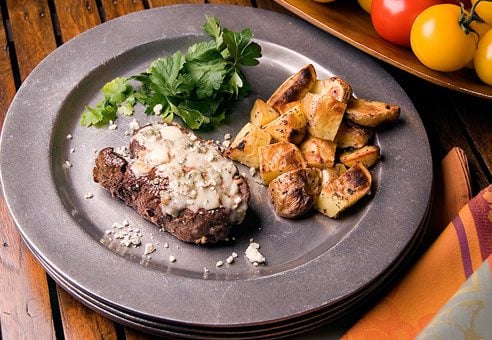 25. Serve food on your
plate instead of on platters. If you eat your dinner restaurant style on your plate rather
than family style, helping yourself from bowls and platters on the table,
you’ll lose weight. Most of us tend to eat an average of 150 percent more
calories in the evening than in the morning. You’ll avoid that now because when
your plate is empty, you’re finished; there’s no reaching for seconds.
25. Serve food on your
plate instead of on platters. If you eat your dinner restaurant style on your plate rather
than family style, helping yourself from bowls and platters on the table,
you’ll lose weight. Most of us tend to eat an average of 150 percent more
calories in the evening than in the morning. You’ll avoid that now because when
your plate is empty, you’re finished; there’s no reaching for seconds.
26.
Don’t eat with a large group. A
study published in the Journal of Physiological Behavior found that we tend to
eat more when we eat with other people, most likely because we spend more time
at the table. But eating with your significant other or your family, and using
table time for talking in between chewing, can help cut down on calories.
27.
Order the smallest portion of everything. If you’re out and ordering a sub, get the 6-inch sandwich. Buy a
small popcorn, a small salad, a small hamburger. Again, studies find we tend to
eat what’s in front of us, even though we’d feel just as full on less.
28.
Eat water-rich foods and you’ll eat fewer calories overall. A body of research out of Pennsylvania State
University finds that eating water-rich foods such as zucchini, tomatoes, and
cucumbers during meals reduces your overall calorie consumption. Other
water-rich foods include soups and salads. You won’t get the same benefits by
just drinking your water, though. Because the body processes hunger and thirst
through different mechanisms, it simply doesn’t register a sense of fullness
with water (or soda, tea, coffee, or juice).
29.
Bulk up your meals with veggies. You can eat twice as much pasta salad loaded with veggies like
broccoli, carrots, and tomatoes for the same calories as a pasta salad sporting
just mayonnaise. Same goes for stir-fries, omelets, and other veggie-friendly
dishes. If you eat a 1:1 ratio of grains to veggies, the high-fiber veggies
will help satisfy your hunger before you overeat the grains.
30.
Avoid white foods. There is some
scientific legitimacy to today’s lower-carb diets: Large amounts of simple
carbohydrates from white flour and added sugar can wreak havoc on your blood
sugar and lead to weight gain. While avoiding sugar, white rice, and white
flour, however, you should eat plenty of whole-grain breads and brown rice. One
Harvard study of 74,000 women found that those who ate more than two daily
servings of whole grains were 49 percent less likely to be overweight than
those who ate the white stuff.
31.
Switch to ordinary coffee. Fancy coffee drinks
from trendy coffee joints often pack several hundred calories, thanks to whole
milk, whipped cream, sugar, and sugary syrups. A cup of regular coffee with
skim milk has just a small fraction of those calories. And when brewed with
good beans, it tastes just as great. You can also try nonfat powdered milk in
coffee. You’ll get the nutritional benefits of skim milk, which is high in
calcium and low in calories. And, because the water has been removed, powdered
milk doesn’t dilute the coffee the way skim milk does.
32.
If you’re going to indulge, choose fat-releasing foods. They should help keep you from feeling
deprived and binging on higher-calorie foods. For instance: honey has just 64
fat releasing calories in one tablespoon. Eggs have just 70 calories in one
hard-boiled egg, loaded with fat releasing protein. Part-skim ricotta cheese
has just 39 calories in one ounce, packed with fat releasing calcium. Dark
chocolate has about 168 calories in a one-ounce square, but it’s packed with
fat releasers. And a University of Tennessee study found that people who cut
500 calories a day and ate yogurt three times a day for 12 weeks lost more
weight and body fat than a group that only cut the calories. The researchers
concluded that the calcium in low-fat dairy foods triggers a hormonal response
that inhibits the body’s production of fat cells and boosts the breakdown of
fat.
33.
Enjoy high-calorie treats as the accent, not the centerpiece Make a spoonful of ice cream the jewel and a
bowl of fruit the crown. Cut down on the chips by pairing each bite with lots
of chunky, filling fresh salsa, suggests Jeff Novick, director of nutrition at
the Pritikin Longevity Center & Spa in Florida. Balance a little cheese
with a lot of fruit or salad.
iStockphoto/Thinkstock
34.
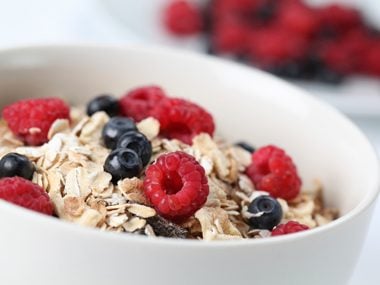
Eat cereal for breakfast five days a week. Studies find that people who eat cereal for breakfast every day
are significantly less likely to be obese and have diabetes than those who
don’t. They also consume more fiber and calcium—and less fat—than those who eat
other breakfast foods. Make oatmeal, or pour out a high-fiber, low-sugar cereal
like Total or Grape Nuts.
35.
Try hot sauce, salsa, and Cajun seasonings They provide lots of flavor with no fat and few calories, plus
they turn up your digestive fires, causing your body to temporarily burn more
calories. Choose them over butter and creamy or sugary sauces.
36.
Eat fruit instead of drinking fruit juice. For the calories in one kid-size box of apple juice, you can
enjoy an apple, orange, and a slice of watermelon. These whole foods will keep
you satisfied much longer than that box of apple juice, so you’ll eat less
overall.
37.
Drop your milk type and you cut calories by about 20 percent. If you drink regular, go to 2%. If you already
drink 2%, go down another notch to 1% or skim milk. Each step downward cuts the
calories by about 20 percent. Once you train your taste buds to enjoy skim
milk, you’ll have cut the calories in the whole milk by about half and trimmed
the fat by more than 95 percent.
38.
Snack on a small handful of nuts. Studies have found that overweight people who ate a moderate-fat
diet containing almonds lost more weight than a control group that didn’t eat
nuts. Snacking once or twice a day helps stave off hunger and keeps your
metabolism stoked. You can also pack up baby carrots or your own trail mix with
nuts, raisins, seeds, and dried fruit.
39.
Get most of your calories before noon. Studies find that the more you eat in the morning, the less
you’ll eat in the evening. And you have more opportunities to burn off those
early-day calories than you do to burn off dinner calories.
40.
Brush your teeth after every meal, especially dinner. That clean, minty freshness will serve as a
cue to your body and brain that mealtime is over.


0 comments:
Post a Comment